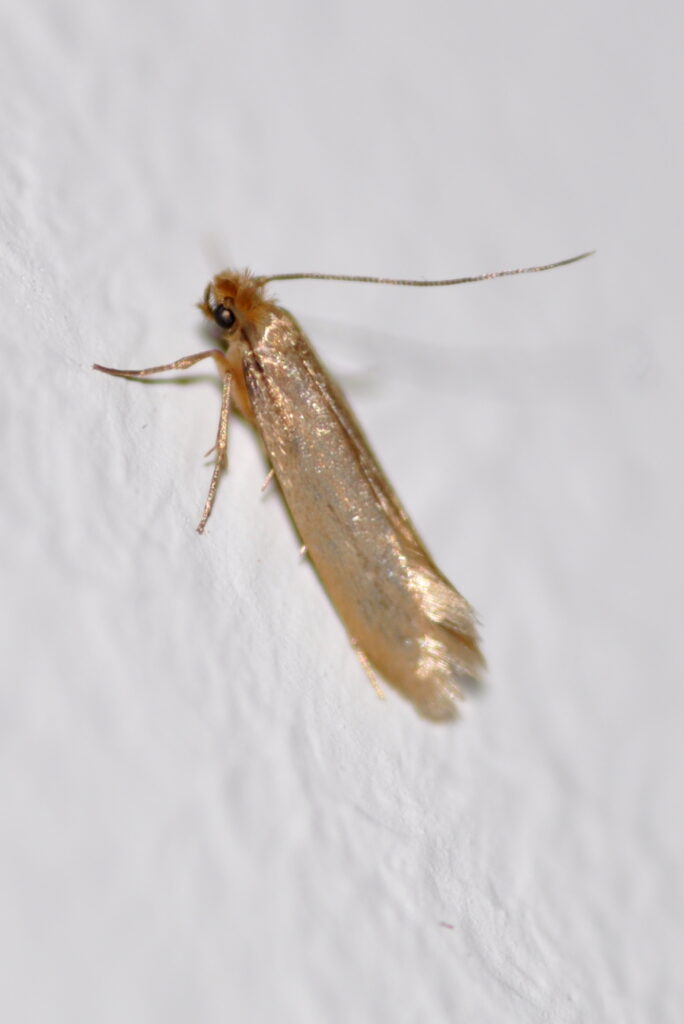
What you should know
Not all moths damage belongings. Clothes moth larvae may feed on suitable natural fibres, while pantry moth larvae can contaminate stored dry foods. Different species require different investigation and treatment priorities.
Signs worth looking for
- Irregular damage to wool, carpets or natural-fibre textiles
- Larvae, webbing or cases in wardrobes and under furniture
- Flying moths repeatedly around food cupboards or storage
- Contaminated dry food packaging or material along shelf edges
Inspection and treatment considerations
Identification establishes whether the moth is a fabric pest, food pest or a harmless visitor. The search then focuses on breeding material and the life cycle. A suitable plan may combine removal of affected sources, cleaning, trapping for monitoring and professional treatment if necessary.
Reducing the risk of recurrence
Inspect and clean susceptible textiles, store clean garments properly and rotate stored dry food. Vacuum dark edges and under furnishings without damaging delicate materials.
A precaution worth taking
Do not spray clothing, food or food-contact surfaces with unapproved products. Discard contaminated food according to appropriate advice.
Frequently asked questions
Are all moths clothes moths?
No. Many moths are harmless indoors; correct species identification is essential.
Why am I seeing moths after cleaning?
Remaining eggs, larvae or overlooked breeding material can sustain activity.
Can moths damage carpets?
Some clothes moth larvae feed on natural animal fibres used in certain carpets and furnishings.